Why Version Control Exists

The Pendrive Analogy Every Developer Will Relate To
Every developer, at the beginning of their journey, asks a very natural question:
“Why do we need a version control system?”
And almost immediately, another thought follows:
“Can’t we just keep a backup of the project folder?”
To understand why that approach fails—and why version control exists—let’s rewind time and look at software development before Git, using a simple analogy.
Life Before Version Control: The Backup Folder Era
Before version control systems were introduced, developers relied on manual backups.
A typical project directory looked something like this:
project_finalproject_final_v2project_latest_finalproject_latest_final_realproject_latest_final_real_this_one
Each folder represented a different “version” of the same project.
There was no history, no clarity, and no confidence about which folder was actually safe to use.
This might work for a single developer for a while.
But everything breaks down the moment collaboration starts.
Collaboration Before VCS: Enter the Pendrive

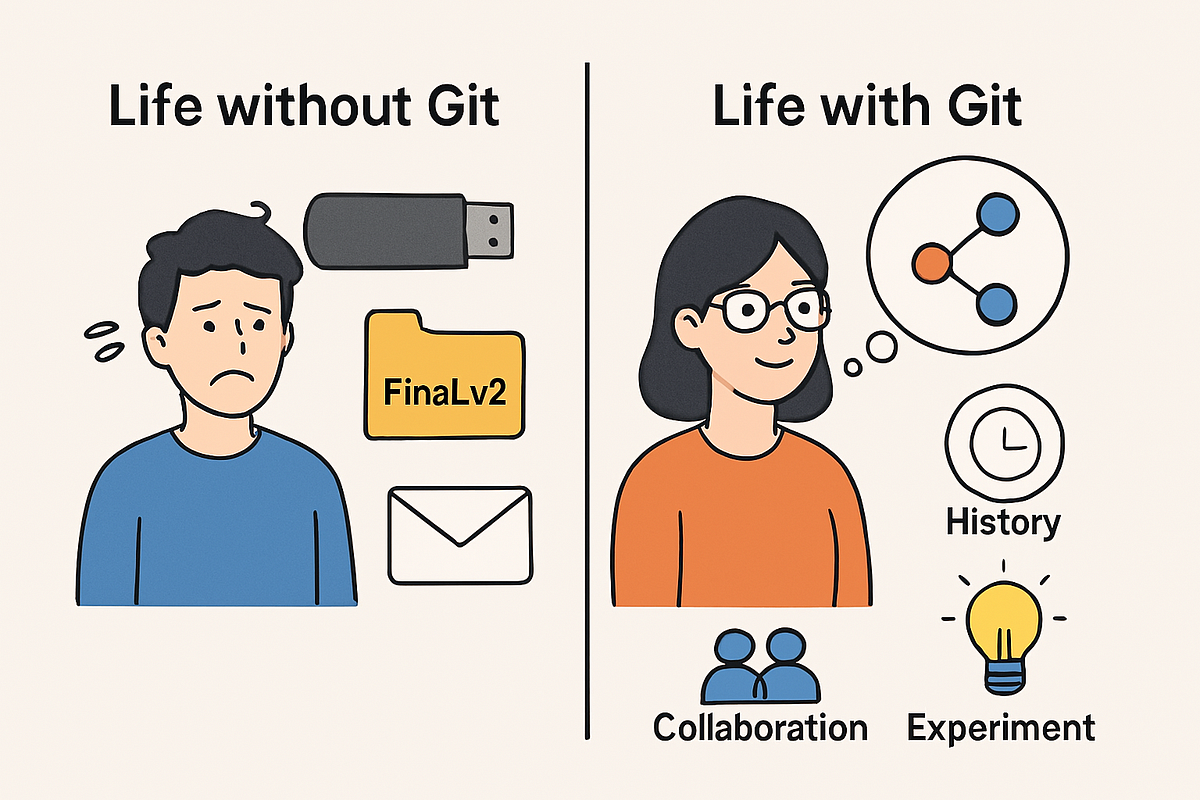
Now imagine two developers working together:
John
Annie
They don’t have Git.
They don’t have branches.
They share code using a pendrive.
The workflow looks like this:
John adds a new feature — the Cart module
He copies the project to a pendrive
He hands it over to Annie
So far, so good.
When Changes Start Colliding
Now Annie starts working:
She adds a new Order module
She modifies some existing Cart code
While doing this, she accidentally introduces a bug
Unaware of the issue, Annie copies everything back to the pendrive and returns it to John.
Deployment Day: What Could Go Wrong?
John receives the pendrive:
He doesn’t review Annie’s changes
He adds a new Wishlist module
He deploys the application to production
And then…
The application crashes.
Debugging Without History Is a Nightmare

Now the real problem begins.
They have no way to know:
When the bug was introduced
Who introduced it
Which change caused it
On top of that:
While John was working, Annie couldn’t
Only one person could work at a time
As the team grows, this process becomes slow, risky, and chaotic
Collaboration turns into a bottleneck, not a benefit.
Why Version Control Systems Were Introduced
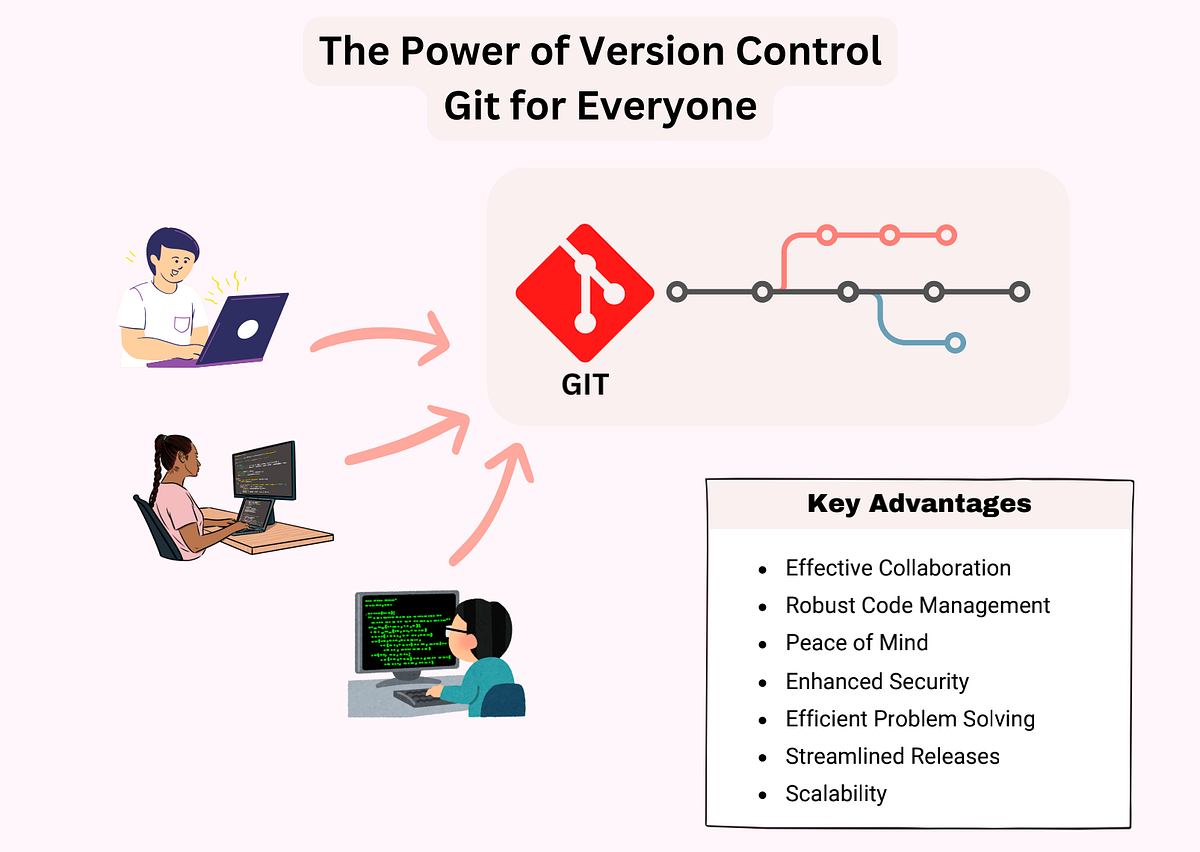
To solve these exact problems, Version Control Systems (VCS) were introduced.
They allow teams to:
Track every change made to the code
Know who changed what and when
Work in parallel without blocking others
Review changes before merging
Roll back to a stable version when things break
Version control transformed software development from chaotic file sharing into a structured, collaborative process.

Without version control, we’d still be:
Passing pendrives around
Creating folders named
final_final_latest_really_this_onePraying nothing breaks after deployment
Version Control Systems aren’t just tools.
They are the foundation of modern software development.